
The brief
A leading quick service restaurant brand needed to compare product performance across its menu, and it needed the results grounded in reality rather than approximation. The study was anchored to a flagship store location in a market that was new to us. Over 500 participants needed to be recruited locally, within close proximity to the restaurant itself. And the food had to be real: freshly prepared in the restaurant kitchen and served under conditions that matched what a customer would actually experience in-store.
That last requirement is the one that separates this project from a standard CLT. Most product testing uses reheated or pre-prepared samples. This client wanted participants tasting exactly what their customers taste, prepared to the same specifications, at the same temperature, within the same time window. Anything less would compromise the read.
What we did
- Recruited over 500 participants in a market new to us, building a local recruitment network from scratch to achieve a fully representative sample
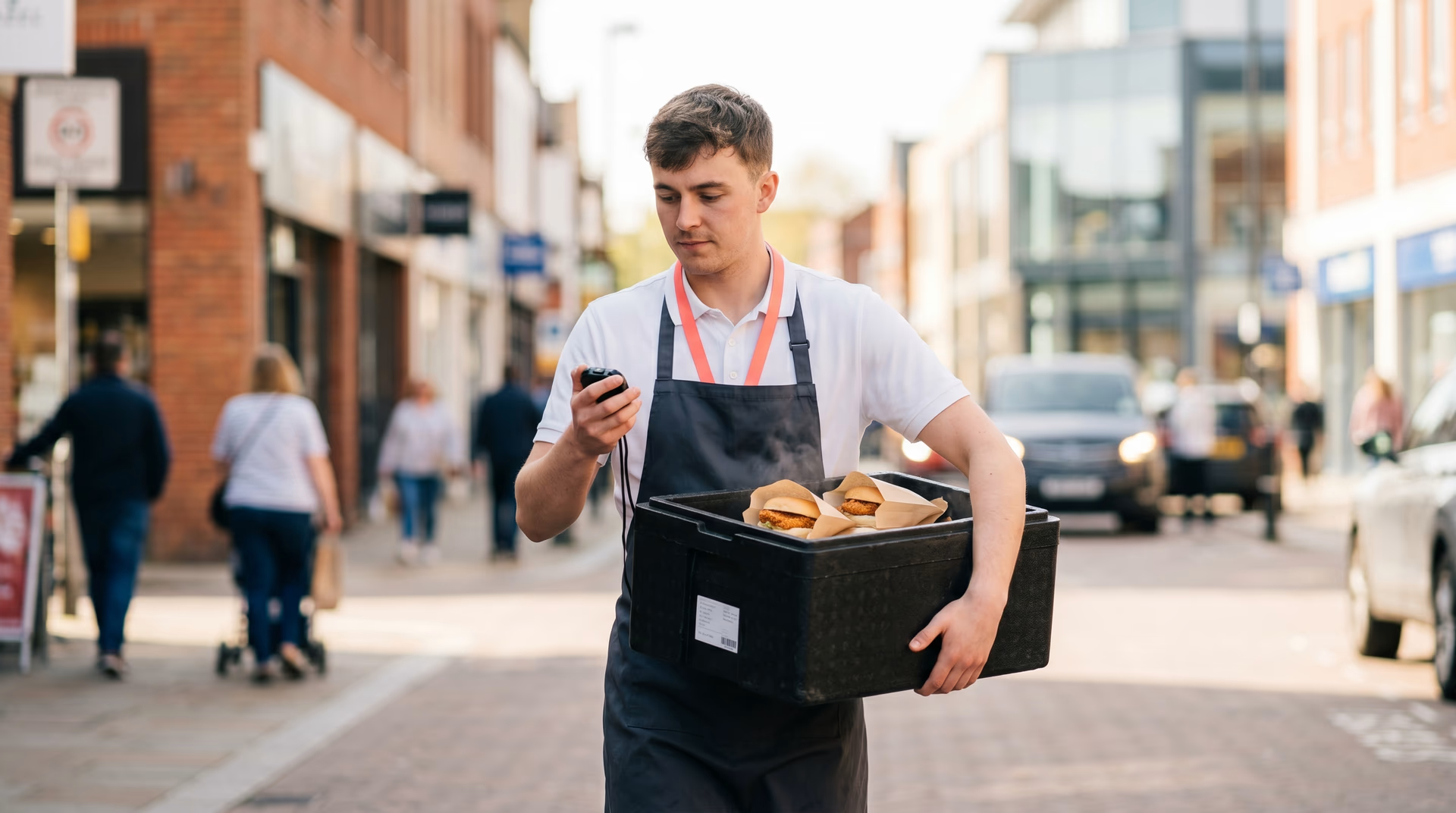
- We tested it in the clients store, we transported the competitors product from their store to our clients store to test.
- Equipped runners with specialist food transportation gear and timers to maintain controlled temperature windows during transit across a high-traffic area
- Worked with the restaurant team to prepare items to exact brand specifications, matching the standard a paying customer would receive in-store
- Created a seamless operational flow between kitchen preparation, transit and testing, so every participant received product at the right temperature and freshness
- Managed structured time-slot scheduling to maintain strong attendance rates and consistent participant flow across the study
The result
A robust dataset from over 500 completed CLTs, with every participant testing product that directly matched the brand’s standards for freshness and quality. Show rates were strong. Operational delivery was consistent across the full run. The client got a clean, comparable read on which products performed best, grounded in real restaurant-quality food rather than an approximation of it.
Why this project matters
Anyone can run a 500-person CLT if the product is shelf-stable and the market is familiar. This project was neither. New market, live kitchen coordination, temperature-sensitive food, high-traffic logistics and a client standard that did not allow for shortcuts. The operational complexity was the whole point, because without it the data would not have reflected what consumers actually experience. That is the kind of fieldwork problem we are built to solve.