
WHAT IT IS
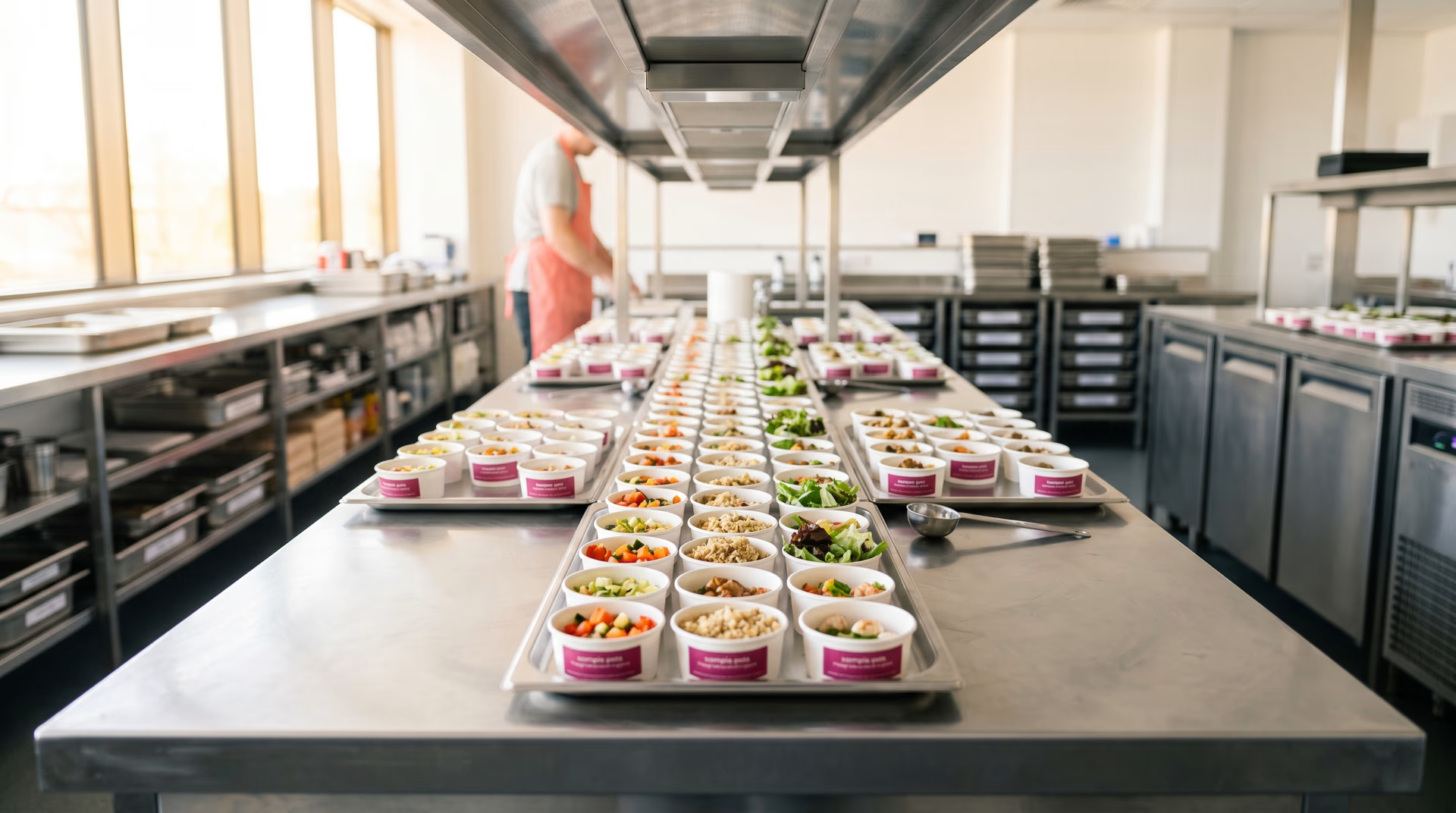
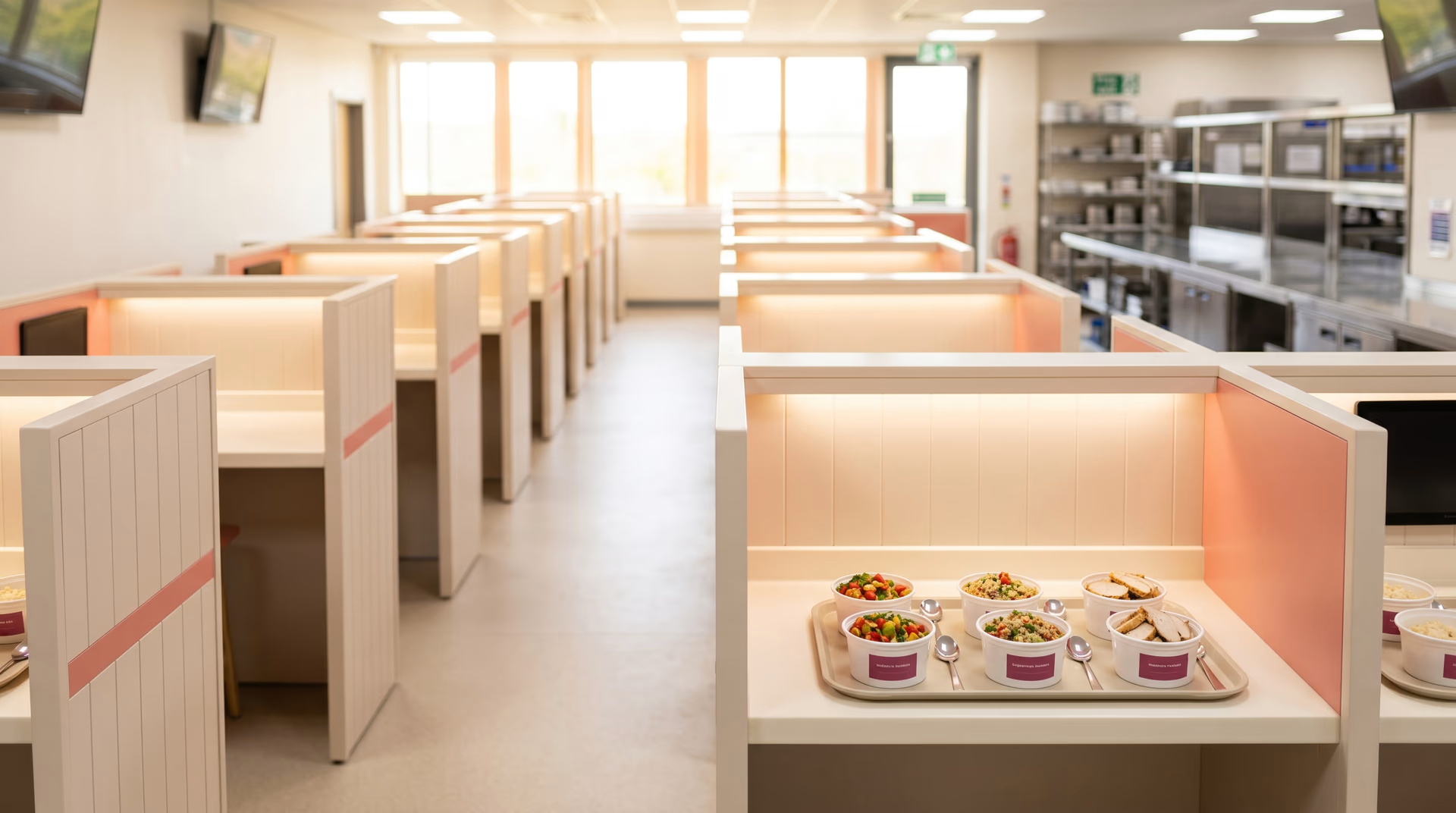
CLTs give you comparable, defensible feedback on sensory, preference, packaging and claims questions. They are particularly useful when you are choosing between variants, benchmarking against competitors, validating reformulations or building the evidence for a claim. Our purpose-built testing hubs in Birmingham and Bury St Edmunds are designed around the operational reality of running CLTs properly. Food preparation and cooking facilities, temperature-controlled storage, controlled portioning and rotation areas, hygiene and alcohol testing processes, ventilation-sensitive testing environments and secure digital data capture are all built in. You are not relying on whatever venue happens to be free that week.
Every CLT follows a documented protocol covering sample storage, preparation sequence, portioning, rotation order, serving conditions, timing between samples and palate cleansing. We schedule participants into structured time slots to manage flow and prevent bottlenecks at the door. Data capture is structured from the start, whether digital or paper-based, so the dataset that comes back is clean, mapped and ready for analysis without a reformatting step.
When to use it
- Consumer sensory testing and side-by-side product comparison
- Variant optimisation across multiple formulations
- Claims validation and substantiation
- Packaging evaluation, on-shelf standout and format testing
- Reformulation testing and cost-engineering validation
- Competitive taste tests and category benchmarking
What you get
- A purpose-built testing hub, not a borrowed venue or function room
- Controlled preparation, portioning, serving and rotation protocols
- Structured feedback capture (digital or paper) with clean data mapping
- Flexible scheduling with sessions running in parallel where needed
- Clean data handover in your chosen format, on time

Artisan baristas. Commercial-grade machines. A CLT that tasted like a real cafe.
A premium coffee brand needed a CLT that replicated the authentic cafe experience, not just the product.
Why clients choose us for CLTs
Most CLTs in the UK happen in venues that were not designed for the job. The preparation area is a side room. The storage is whatever the building offers. The rotation plan lives in someone’s head rather than in a protocol. Our hubs exist specifically to solve that problem. Every part of the Birmingham and Bury St Edmunds facilities is built around the reality of running CLTs at volume, under controlled conditions, to a consistent standard. That is why clients come back.

Book a CLT
Tell us what you are working on. We reply within one working day with feasibility, timings and a straight answer on whether we are the right fit.